For farmers and local food producers, the shift towards selling directly to consumers is more than just a trend—it’s a path to better margins, stronger community connections, and greater control over your business. But choosing the right platform to facilitate these sales can be overwhelming.
Should you build your own professional online store with an e-commerce giant like Shopify? Should you stick to the grassroots, community-driven model of Reko rings on Facebook? Or is there a specialized solution that offers the best of both worlds, like Farmoi?
As the team behind Farmoi, we’ve built our platform specifically with producers in mind. However, we believe in making informed decisions. In this post, we’ll give you an honest, side-by-side comparison of these three popular options based on price, features, visibility, and overall fit for a farm-based business.
Shopify: The E-commerce Giant
Shopify is the world's leading e-commerce platform, designed to let anyone sell anything, anywhere. It’s a powerful tool meant for building a standalone brand.
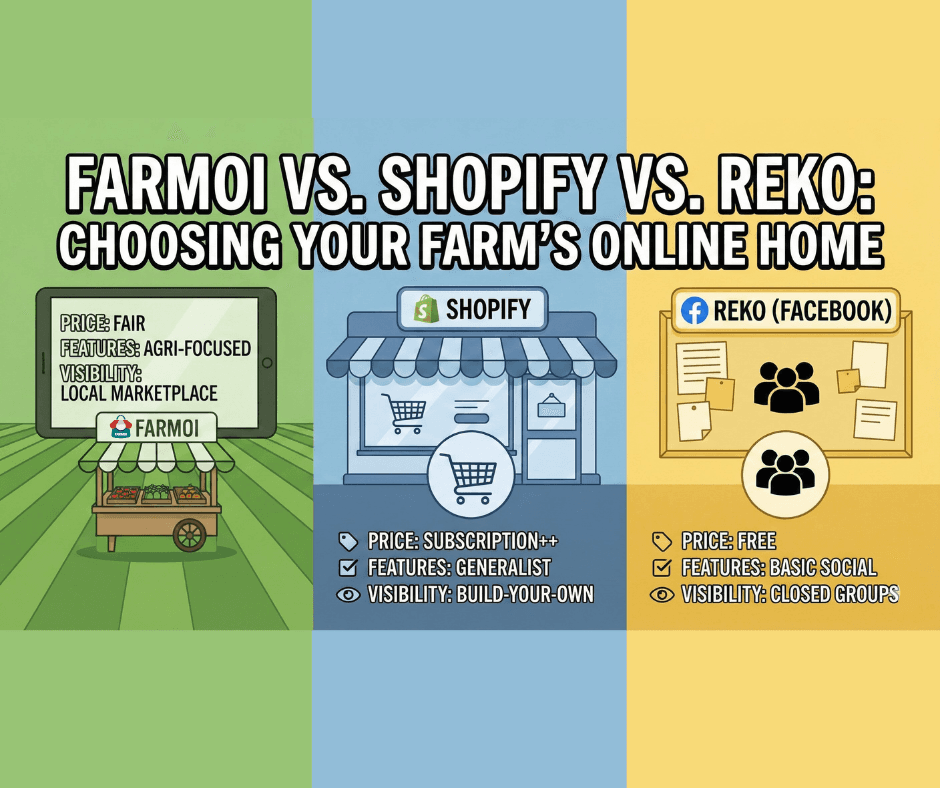
- Price: Shopify operates on a subscription model. Plans start around $29/month for the Basic tier, going up significantly from there. Plus, you’ll pay transaction fees on every sale unless you use their specific payment processor. Keep in mind that to get functionality specific to food sales (like delivery date pickers or local pickup management), you often need to pay for additional third-party apps, driving the monthly cost up further.
- Features: The feature set is vast. You get a fully customizable online store, powerful inventory management, and integrations with countless marketing channels. However, it's a generalist platform. Out of the box, it's not tailored for the unique needs of selling perishable goods with specific harvest times and pick-up windows. Setting it up to work smoothly for a farm requires significant time and technical know-how.
- Visibility: This is the biggest hurdle. When you build a Shopify store, you are building a shop on a deserted island. It is 100% your responsibility to drive traffic to your website through SEO, social media marketing, email campaigns, and paid advertising.
